Skip to content

Impregnation

We rely on state-of-the-art impregnation processes for vacuum-pressure treatment. This allows us to offer a maximum wood life expectancy of 15 up to 80 years and to secure the development of critical infrastructure worldwide.

Capabilities

induo® impregnation - a reliable protective barrier for decades

As a leading European manufacturer, induo® uses exclusively impregnation processes with proven maximum effectiveness for wood protection. Our wooden poles are subjected to a precise pressure impregnation process in modern impregnation plants.

Depending on the technical specification and the requirements of the target market, we offer standard-compliant creosote impregnation using the Rüping process (creosote WEI Type B in accordance with EN 13991) or environmentally friendly salt impregnation based on chromium-free copper salts - such as Tanalith, Wolmanit, Korasit or Impralit. This ensures complete penetration of the sapwood zone of the pine wood.

induo® impregnation plant - wooden poles in the pressure impregnation process
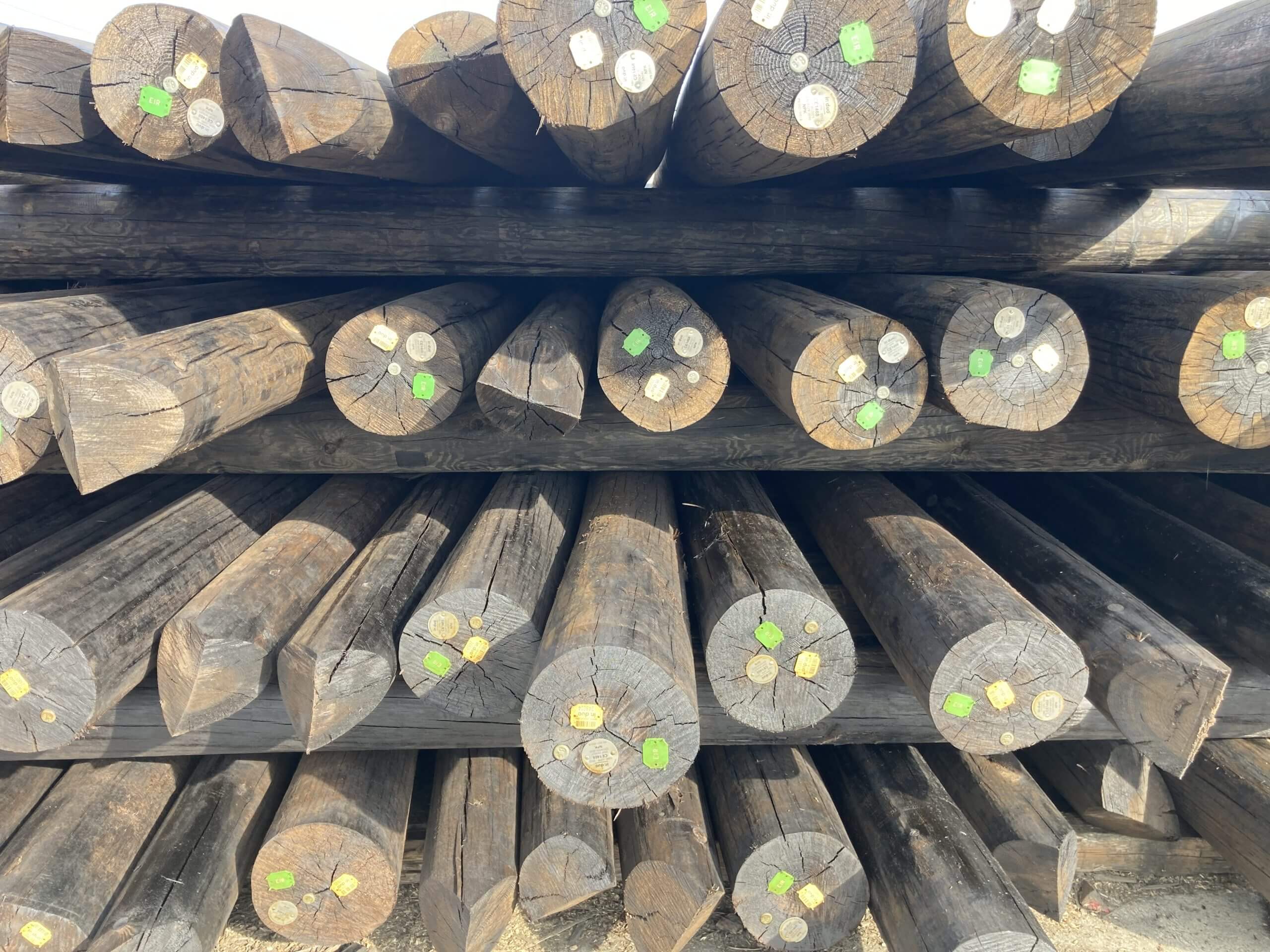
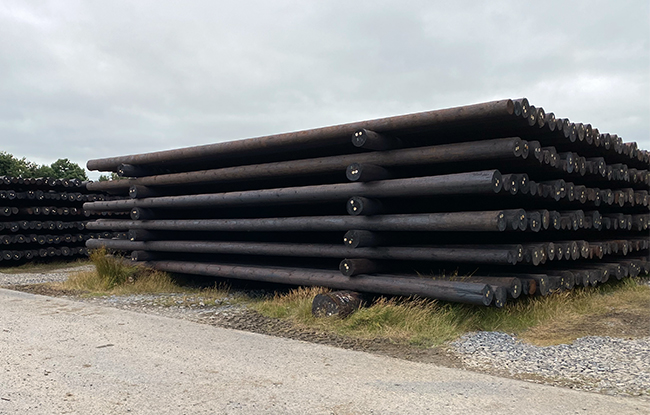
Creosote-impregnated wooden poles - induo®
Creosote impregnation

Creosote protection - the standard for core infrastructure

For over 100 years, creosote impregnation has remained the unrivalled solution for telecommunications and power networks in many climatically demanding markets worldwide. The technology we use - the Rüping process - prevents the poles from bleeding afterwards during storage and ensures an absolutely uniform impregnation of the wood.

Hard engineering data

Process and temperature in the Rüping process

We press hot creosote oil at a controlled temperature of approx. 105 °C to 140 °C under high pressure directly into the wood cells. The impregnation is carried out after a precise application of initial air pressure (100-700 kPa), which optimally saturates the wood.

Retention level and preservative uptake

We guarantee a reliable preservative retention of at least 95 to 140 kg per cubic metre of wood.

Certified creosote

We use the certified quality oil of the classic Type B, which is generally specified and preferred for infrastructure projects in countries outside the European Union (EU).

Salt impregnation

Safety for people and the environment

For projects that require high environmental compatibility - in European low- and medium-voltage networks, in telecommunications networks or in the agricultural sector - we use certified aqueous solutions of copper salts in concentrations of 3% to 6%.

Immediately afterwards, the impregnated wood undergoes a controlled fixation process, through which the preservative is permanently anchored in the wood in a leach-resistant manner.

Impregnation agents used

Tanalith E3475

Copper-triazole technology, proven on the market for over 20 years.

Wolmanit CX 8 WB

Wood-preservative salt based on Cu-HDO - chromium-, boron- and arsenic-free, with excellent plant compatibility.

Korasit KS 2 / KSM

Copper complexes and quaternary ammonium compounds - protection against fungi, insects and termites.

Impralit

Chromium-free, boric-acid-based wood preservative - preventive protection against wood-destroying insects, decay fungi and soft rot.

Technology comparison

Technical parameters - selecting the right protection

A clear, technical parameter table, readable for planning departments.

Criterion Creosote impregnation WEI Type B Salt impregnation (Tanalith, Wolmanit, Korasit)
Substances used Impregnation oil in accordance with EN 13991 Chromium-free copper salts
Protective effect Decay, micro-organisms, termites, cracking Fungi, insects, termites
Colouring of the pole Dark brown to black Light green (patinates to grey over time)
Recommended markets UK, Ireland, Middle East, Africa EU region, telecommunications near residential areas, power supply, agriculture
Service life in the ground approx. 15-80 years approx. 8 to 25 years (significantly extendable with LoPro® wood-protection bandages)

Secure the project with the optimal technology

Are you planning an overhead line project and wondering which preservative is best suited to the particularities of your market, the soil climate and local standards? Configure your preliminary timber parameters now - our engineers will help you select the best protection system, from robust creosote impregnation through environmentally friendly salt impregnation to our highly effective LoPro® wood-protection bandages.

FAQ

Frequently asked engineering questions

Do you have another question? Contact our team.

To the full FAQ
Why are poles made from pine (Pinus sylvestris) easier to impregnate than spruce poles?

Effective and durable pressure impregnation can take place only in the sapwood layer of the tree. The central and northern European pine that we carefully select is naturally distinguished by a particularly wide and uniform sapwood zone, which enables deep and complete absorption of the preservative.

Spruce wood, by contrast, has a completely different cell structure. Among specialists it is regarded as resistant to impregnation, since it physically cannot absorb the preservative deeply enough. This makes pine the qualitatively superior choice for long-term ground installation.

What is the difference between the full-cell process and the Rüping process?

The traditional full-cell process (also known as the Bethell process) first creates a vacuum that draws the air completely out of the wood cells. As a result, the cells then fill completely with the preservative.

In the technologically leading Rüping process - a so-called empty-cell process - we begin by using controlled air overpressure to compress the air within the cells. Only afterwards is the creosote oil introduced. Once the pressure process is complete, the trapped air expands again and gently forces the excess oil out of the cell cavities.

The result: our wooden poles receive maximum deep protection within the cell walls, while the cavities remain empty. This means the poles are optimally preserved, yet do not tend to bleed or drip during transport or storage.

How are impregnated poles safely disposed of at the end of their service life?

All chemically treated wooden poles must, at the end of their life cycle - which spans several decades - be sent for proper thermal recovery (energy recovery).

This means that the poles are safely disposed of in accordance with statutory environmental regulations in approved industrial or biomass power plants equipped with modern flue-gas cleaning, and used for clean power and heat generation.