


Production process
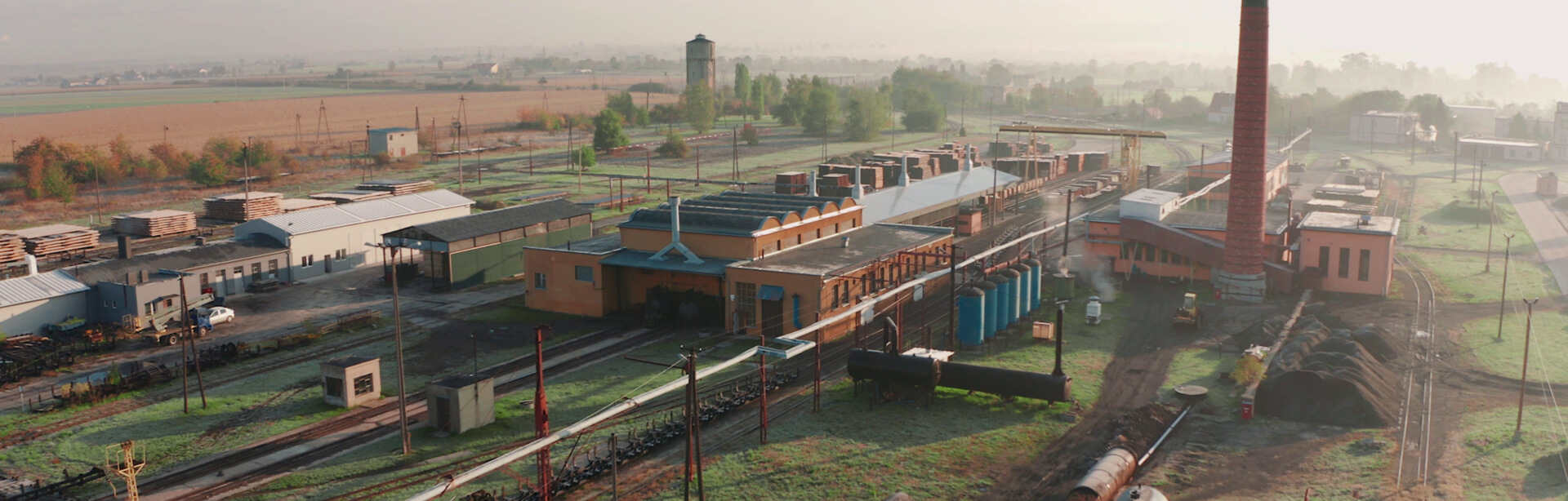
Take a look behind the scenes of our production plants in Poland: from here, over 600,000 certified poles are shipped each year to markets on five continents.
induo® production process - from raw material to certified infrastructure
As a leading European wooden pole manufacturer, we take complete control over every phase of product creation. induo®’s production process is a precisely scheduled technological chain. It comprises careful raw material selection (exclusively slow-growing pine, Pinus sylvestris), mechanical debarking, drying and durable deep-pressure impregnation.
We supply first-class wood poles for infrastructure as well as precisely machined, peeled timber logs. The entire process is subject to seamless quality control. This ensures full compliance with international industry standards such as BS 1990, DIN 48350 and EN 14229.
Durability through precision
Our strength lies in standardisation and German engineering. Follow how we create infrastructure that lasts for decades.
-
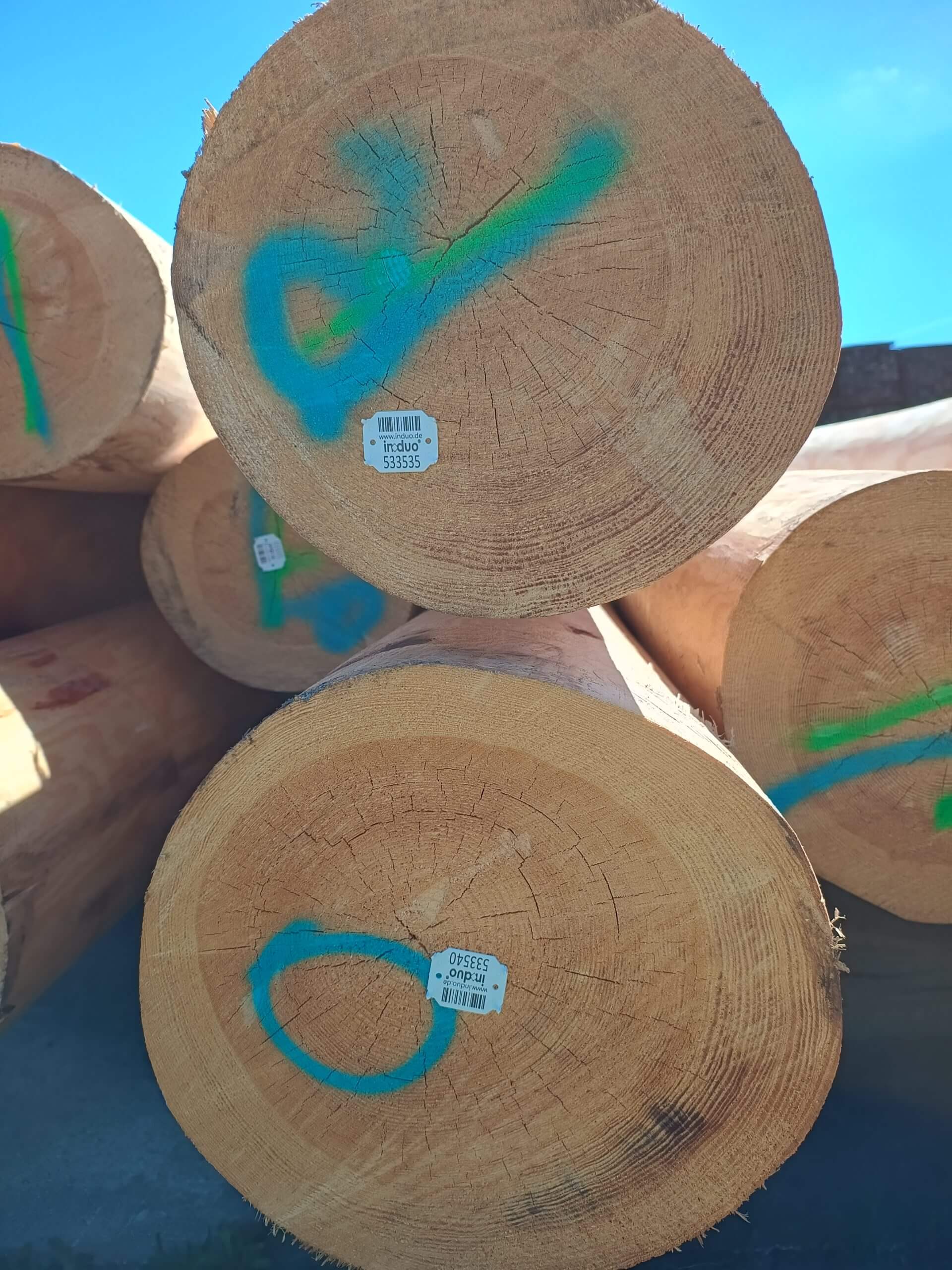
Step 1: felling and raw material selection
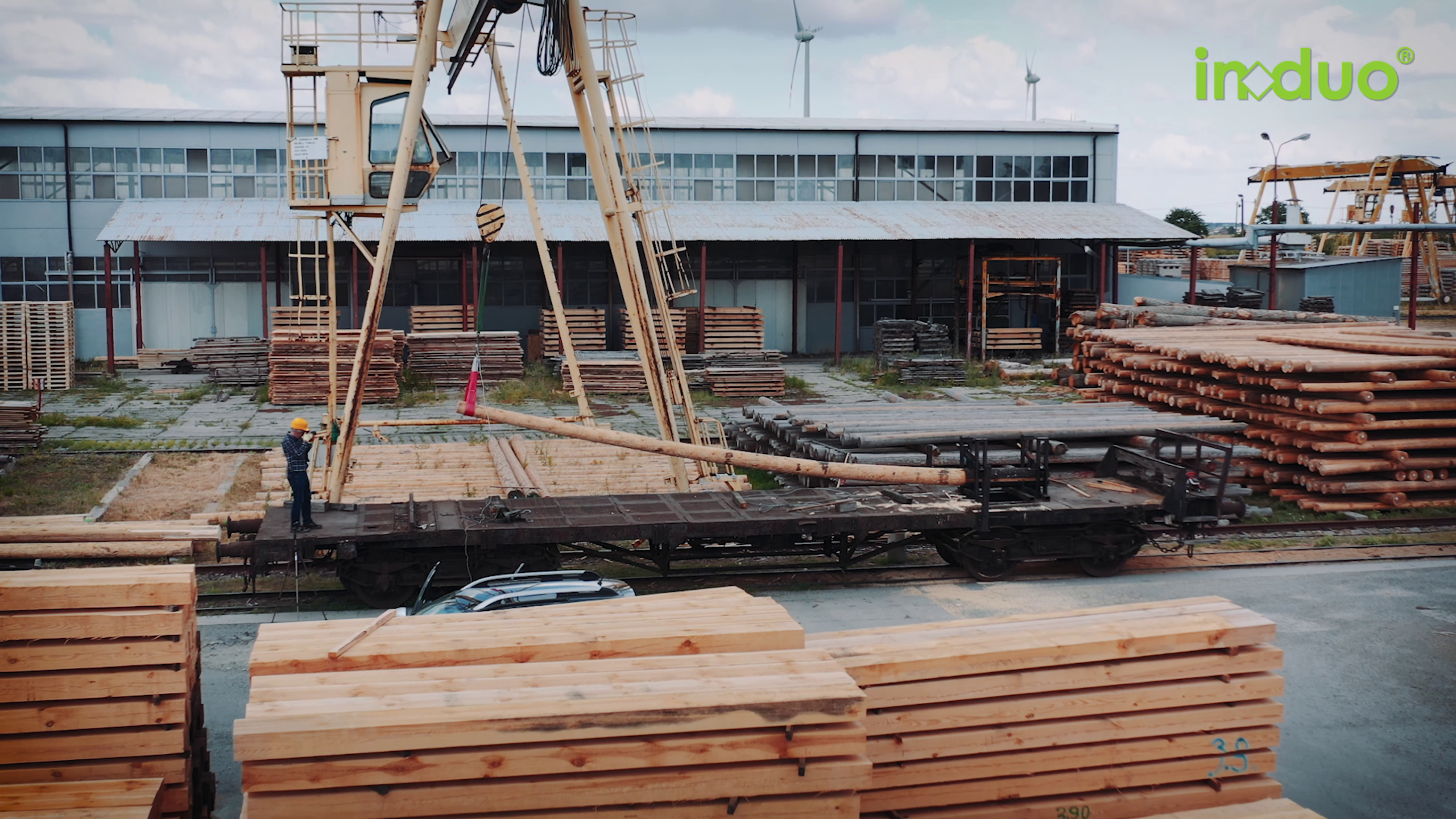
We use pine poles that originate exclusively from sustainably managed forests in Northern and Central Europe. A strict selection of the logs takes place directly at the point of felling in the forest.
-
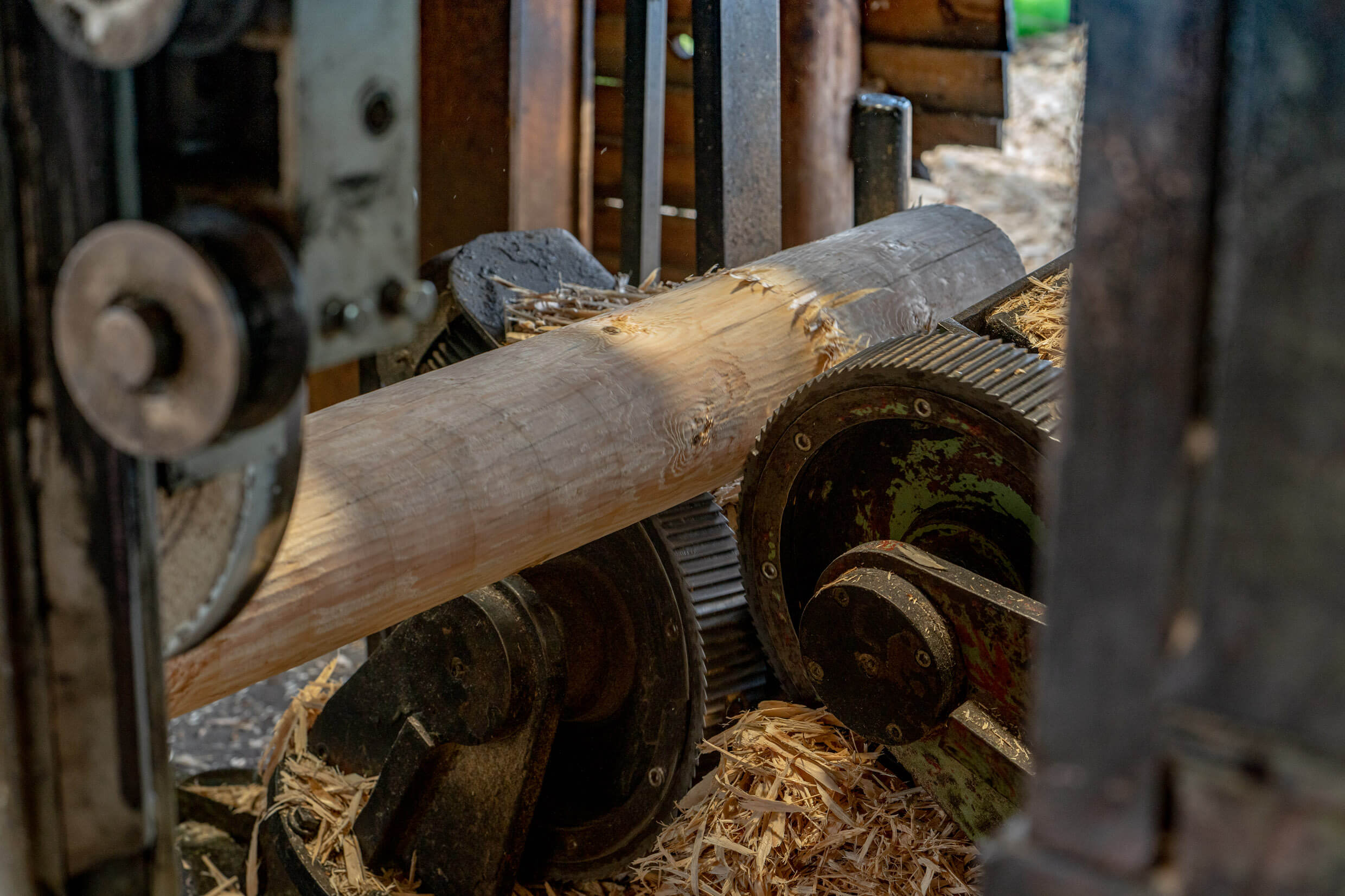
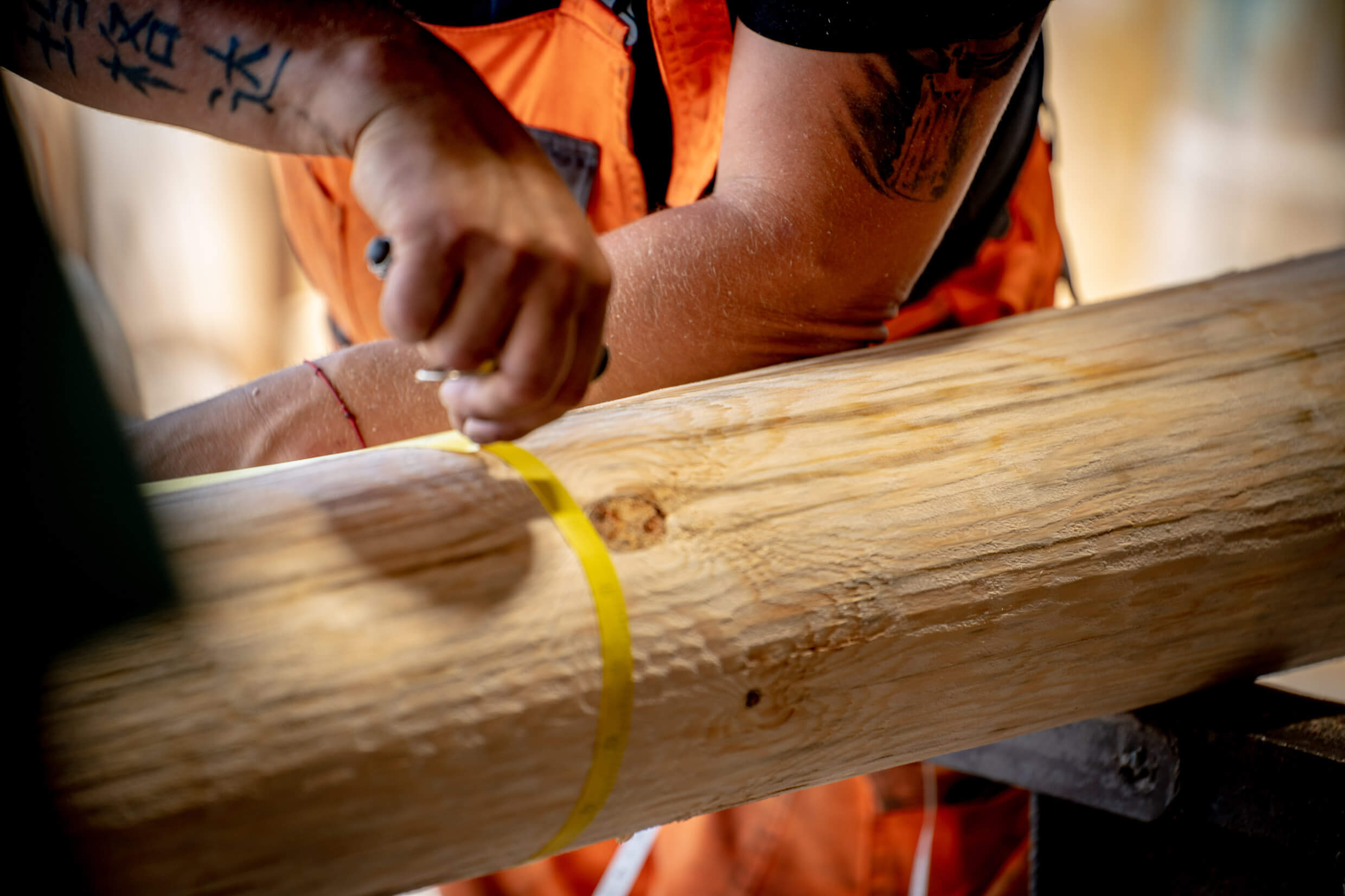
Step 2: mechanical debarking and machine peeling
The logs arrive at our Polish plants, where they undergo precise machining. The result is flawlessly white, smooth, peeled poles that are optimally prepared for the subsequent process steps.
-
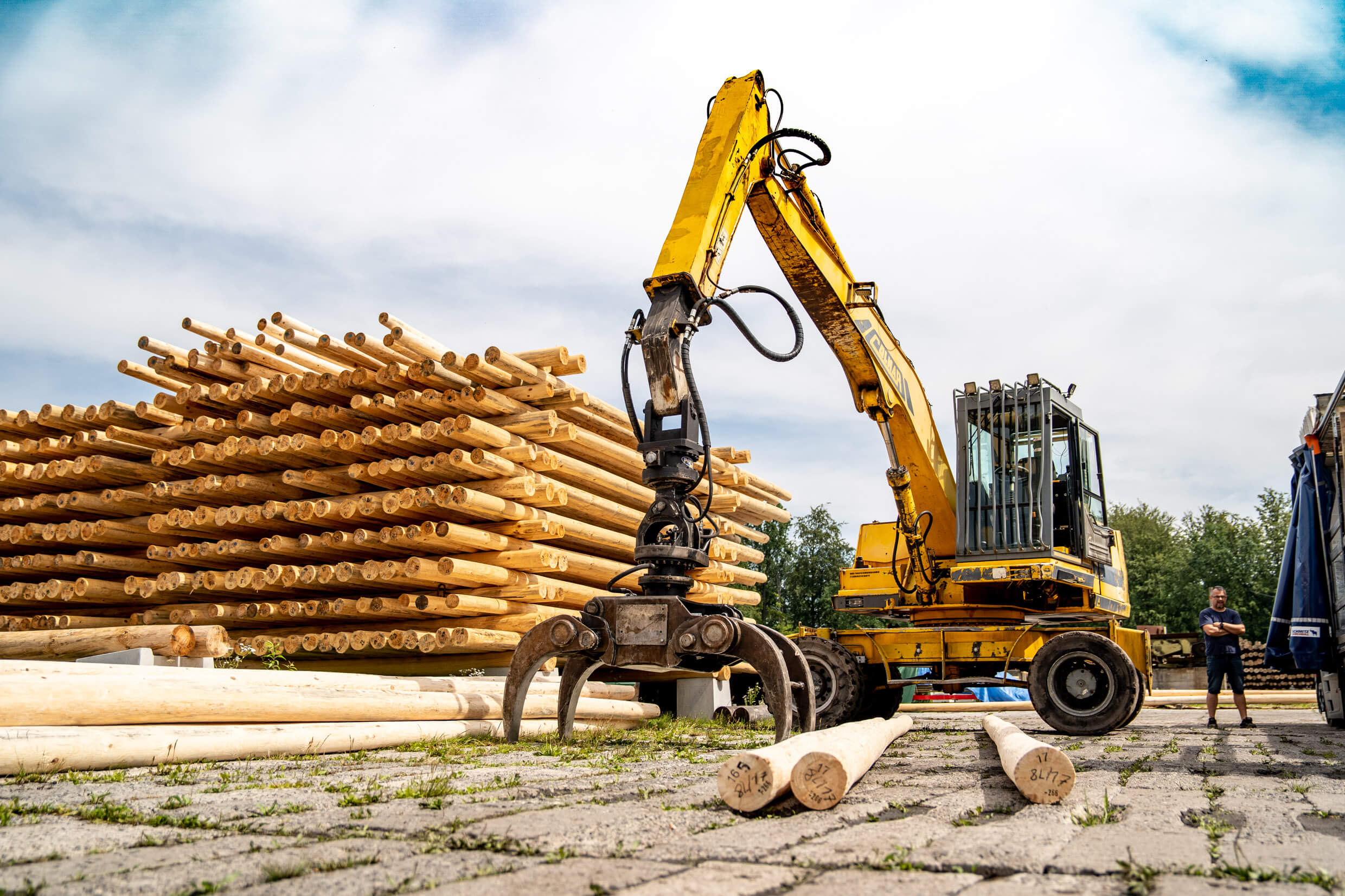
Step 3: optimal drying
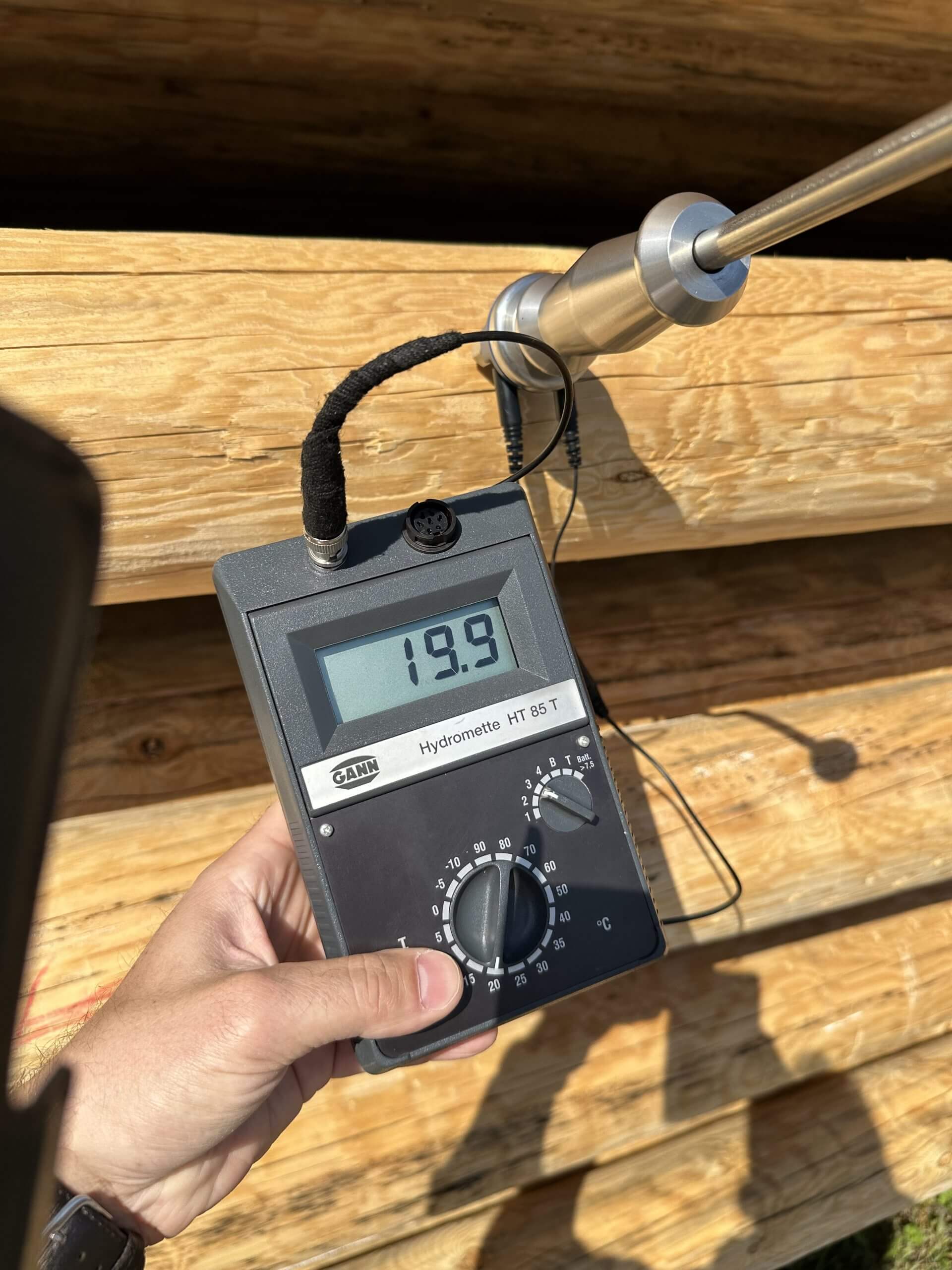
The wood is dried technically or seasonally until the ideal wood moisture content is reached. This crucial step ensures that the wood can absorb the greatest possible amount of preservative during the subsequent impregnation.
-
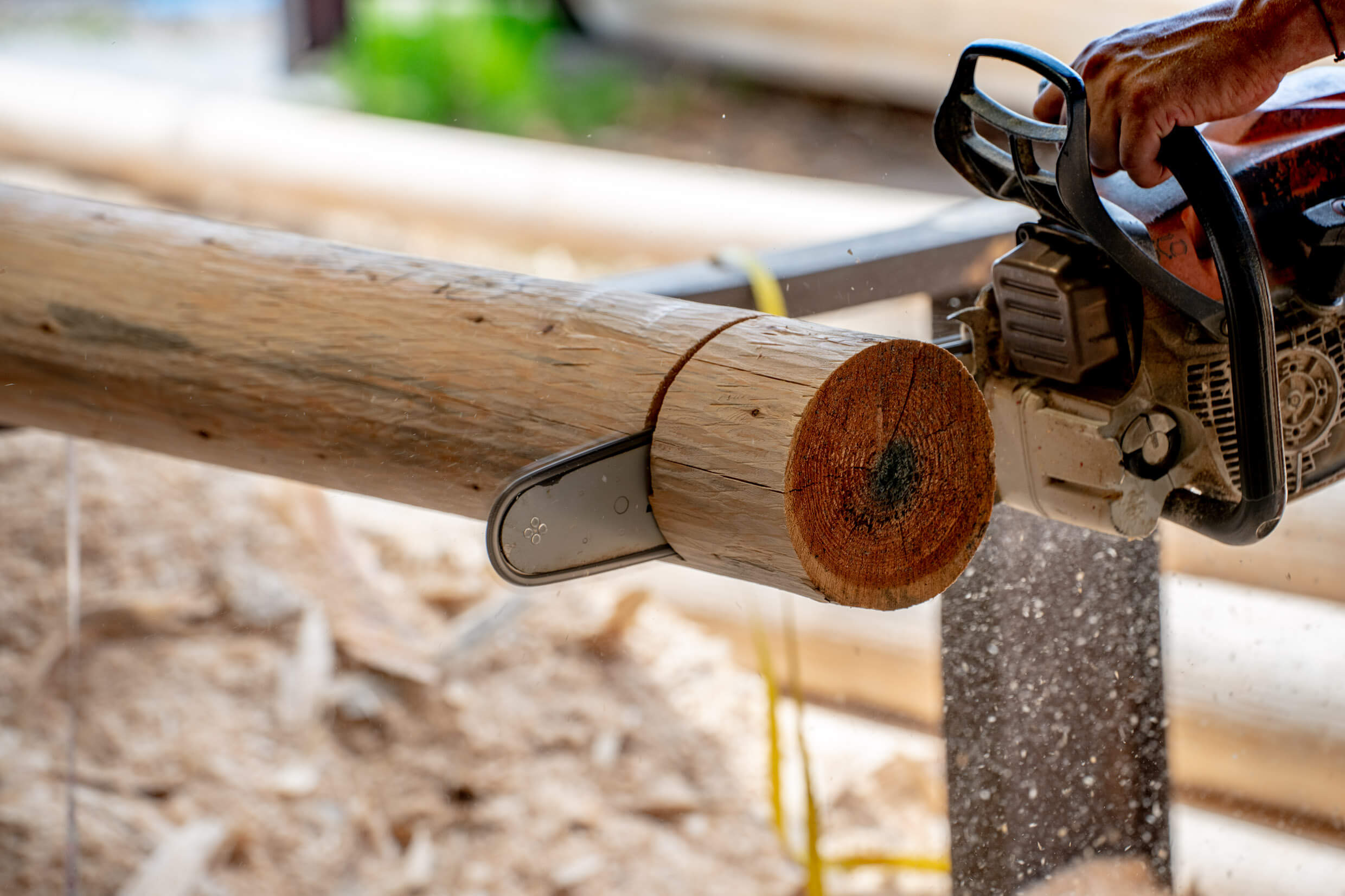
Step 4: "Plug & Play" customisation
Untreated wooden poles made exactly to measure: before deep-pressure impregnation, we prepare each pole fully to your specifications. This includes precise cutting to length, machining and drilling for individual fittings. The processing is carried out either according to your plans or on the basis of technical drawings that we create specifically for your project.
-
Step 5: deep-pressure impregnation
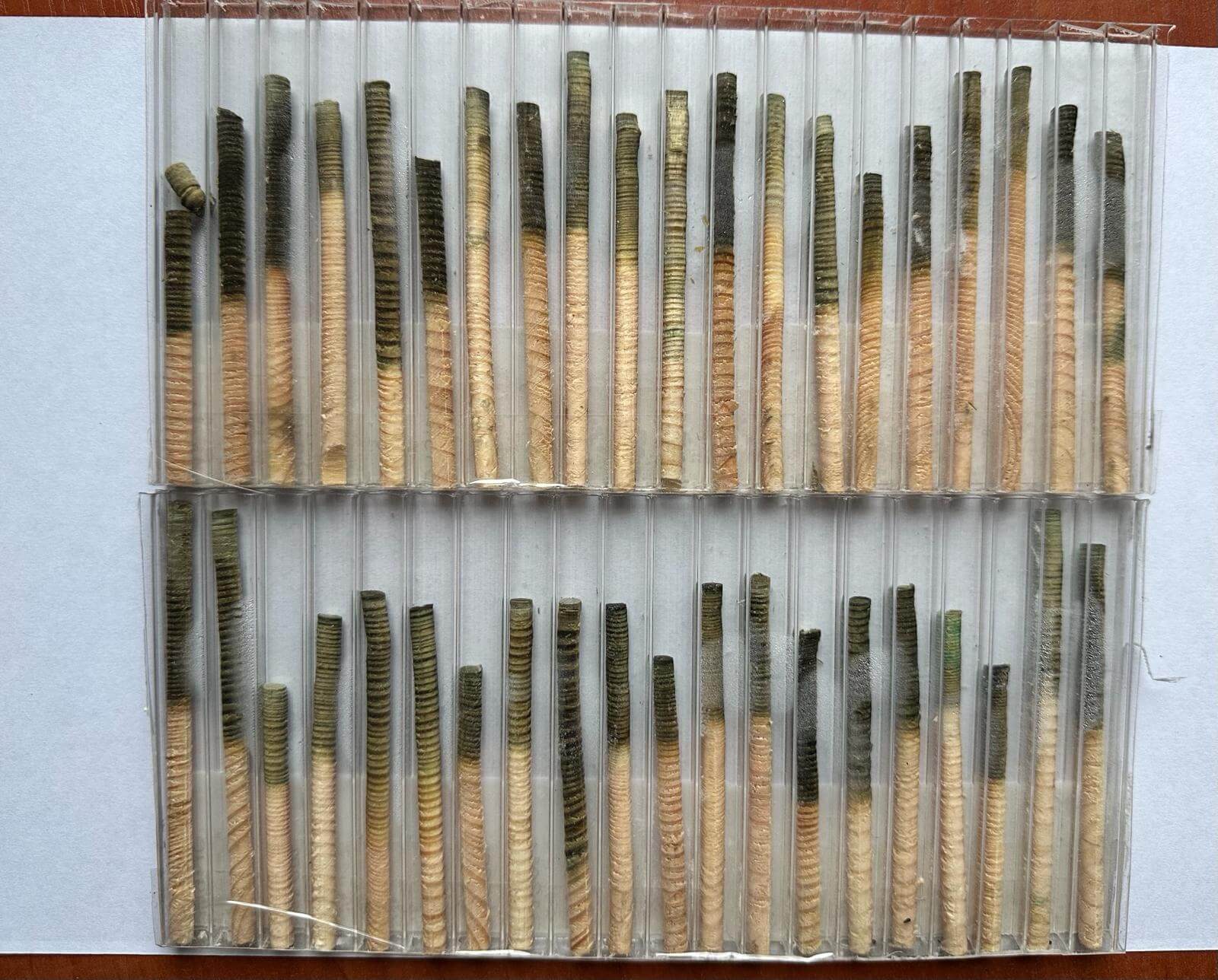
The wood is transferred to autoclaves. Depending on the target market, we use hot creosote (105-140 °C, Rüping process) or an environmentally friendly salt impregnation (such as Tanalith, Wolmanit, Korasit or Impralit).
-
Step 6: additional LoPro® protection
As the final, optional but strongly recommended manufacturing step, a LoPro® wood-protection bandage is fitted in the critical ground-air zone of the pole.
Load tests and strict certification
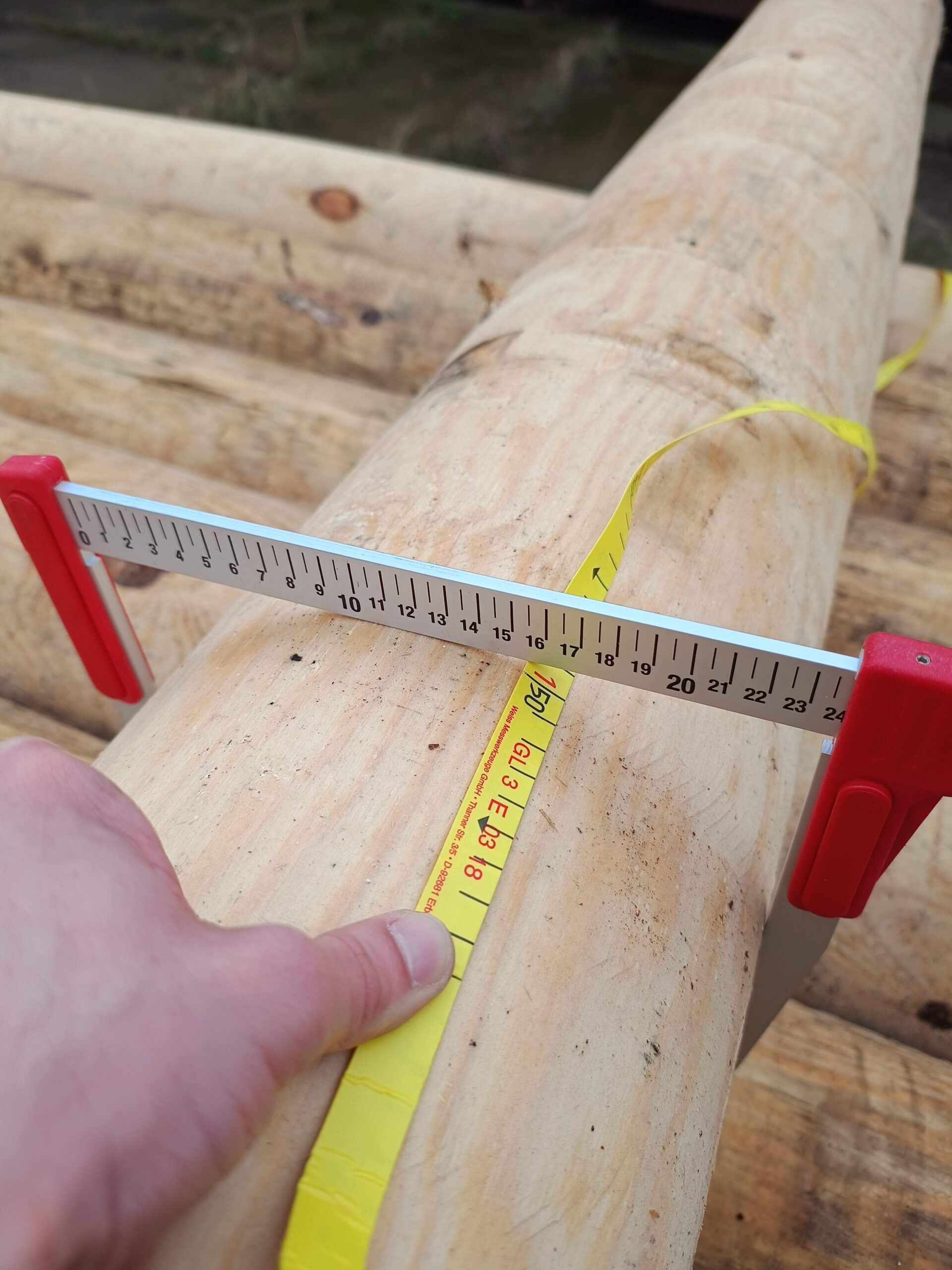
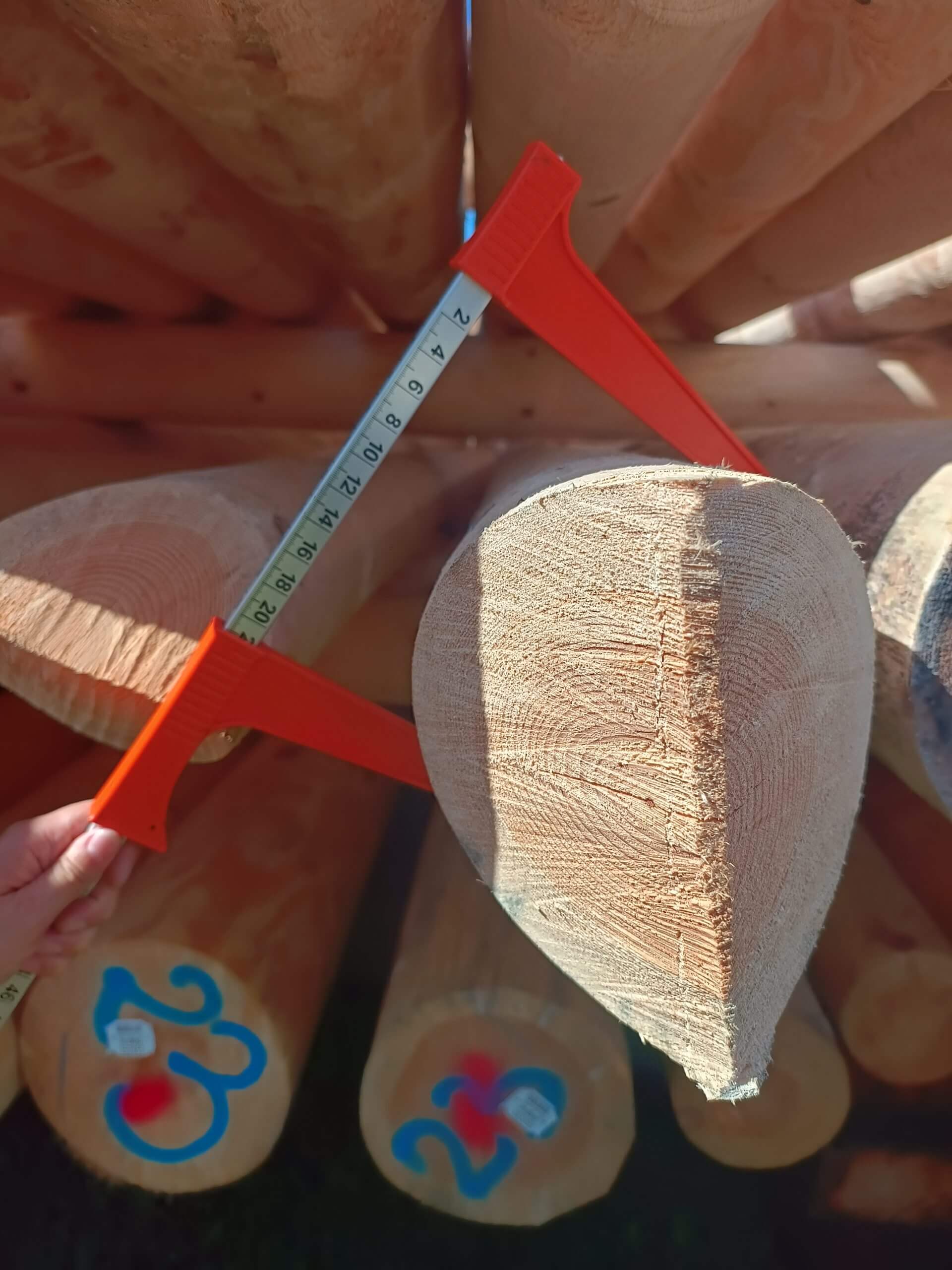
In projects for the energy and telecommunications sector, the tolerance threshold is zero. As a leading supplier in the industry, we continuously subject our production to rigorous load tests that check elasticity, bending strength and breaking point.
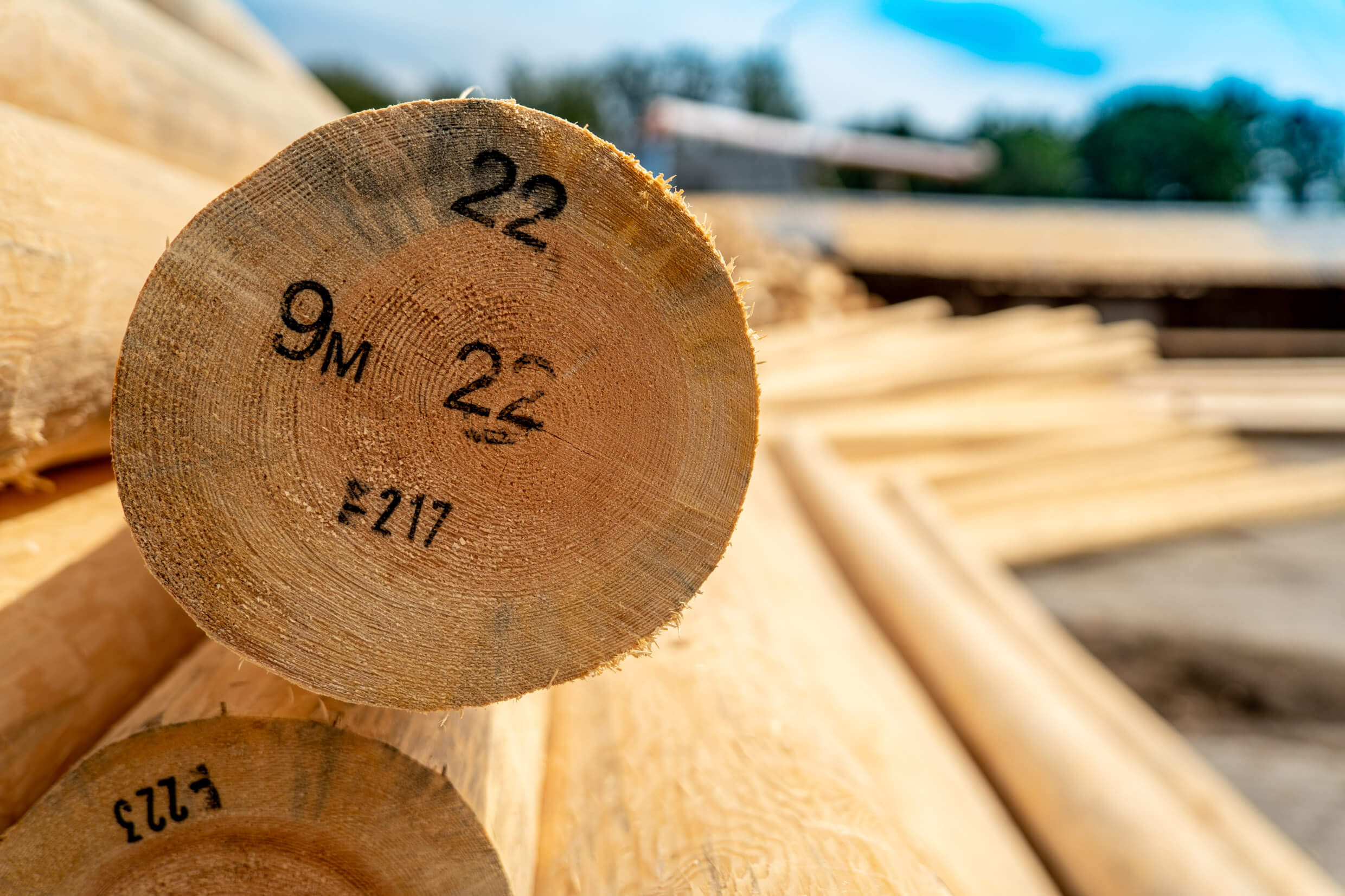
Every single round wooden pole manufactured is precisely classified, permanently marked with a customer-specific plate and clearly labelled. This ensures seamless traceability over decades - from the moment the raw timber arrives at the plant site through to delivery by container or lorry.

Entrust your production to the experts: secure your supply chain.
You have gained an insight into our precise manufacturing. Send us your specifications now and we will supply you with first-class quality infrastructure - absolutely on time. Simply select the desired timber parameters and the type of impregnation and, if available, attach your execution documents.
Frequently asked technical questions
Do you have another question? Contact our team.
Where does the wood used for our poles come from?
We use exclusively pine wood from sustainable forestry. The careful selection of growing regions in central and northern Europe ensures narrow annual rings and a pronounced sapwood zone. These natural wood properties are the decisive factor for optimal and durable impregnation saturation.
For large orders, do I have to mill or drill the poles myself?
No, you do not. Our production is consistently designed for the “Plug & Play” format. We drill holes for fittings and bolts, cut the pole tops to customer specifications and carry out all necessary machining directly at our plant. You receive ready-to-install wooden poles that can be delivered directly and installed in the ground without any further preparation.
Can I also order poles from you without impregnation?
Yes, this is easily possible. As an experienced palisade manufacturer and pole producer, we always keep debarked, white peeled poles directly in stock. This is the ideal solution for external impregnation plants or for projects in which impregnation is to be carried out flexibly and locally, directly at the installation site.